Understanding Cecil Clay and Its Impact on Concrete
If you own a home or business in Greensboro, you're likely building on Cecil clay, one of the most challenging soil types for concrete construction in North Carolina. Cecil clay is a residual soil formed from the weathering of granite and other metamorphic rocks common throughout the Piedmont region. This clay has unique properties that make it particularly problematic for concrete foundations, driveways, and patios.
The issue isn't that Cecil clay is inherently weak. Rather, its high clay content and mineral composition cause it to expand when wet and shrink dramatically when dry. This constant movement puts tremendous stress on concrete structures built above it. Homeowners throughout Greensboro experience foundation settling, driveway cracks, and surface damage that seem to appear overnight, often blaming poor construction when the real culprit is the soil beneath their feet.
How Piedmont Clay Foundation Cracking Develops
Piedmont clay foundation cracking occurs through a predictable cycle that repeats year after year in North Carolina. During heavy rainfall or spring thaw, the clay absorbs water and expands, pushing upward against concrete structures with surprising force. A single clay layer can exert pressures exceeding 10,000 pounds per square foot as it swells. This expansion causes concrete to heave, creating stress points that eventually crack.
When summer arrives and the region experiences dry spells, the opposite happens. The clay shrinks away from the concrete, leaving gaps and voids beneath the surface. This creates a weakened foundation that can no longer support the weight above it evenly. The concrete, now unsupported in certain areas, sags and cracks further. Over multiple seasons, these cycles compound, turning minor cracks into serious structural problems. This is why homeowners often call for Concrete Repair & Resurfacing services year after year, only to see new damage appear.
Freeze Thaw Concrete Damage in Greensboro's Climate
While Cecil clay presents year-round challenges, Greensboro's winter weather adds another layer of complexity. The region experiences freeze thaw cycles that accelerate concrete deterioration, particularly in concrete driveways and outdoor surfaces. When water penetrates concrete and temperatures drop below freezing, that water expands with nearly 9 percent more force than the concrete can accommodate. The ice pushes outward, creating spalling (surface flaking), scaling, and deep cracks that compromise the structural integrity of the concrete.
The freeze thaw problem is especially severe because it works in combination with Cecil clay issues. The expansive soil beneath the concrete already creates stress and micro-fractures. These small cracks become entry points for water and road salt during winter months. Once water enters these cracks and freezes, it wedges them open further. After several freeze thaw cycles, what started as a hairline crack becomes a significant structural problem. This is why Concrete Driveways in Greensboro often show visible damage by late winter, and why preventative maintenance is so critical.
Cecil Clay Concrete Damage: Common Signs and Symptoms
Recognizing the early signs of Cecil clay concrete damage can help you address problems before they become expensive repairs. The most common symptom is a pattern of cracks that appear to follow no logical structural path. Rather than cracks radiating from a point of impact or following a beam line, Cecil clay damage typically creates random, interconnected cracks across the surface. You might also notice that cracks seem to widen or close depending on the season, which is the soil expanding and contracting beneath the surface.
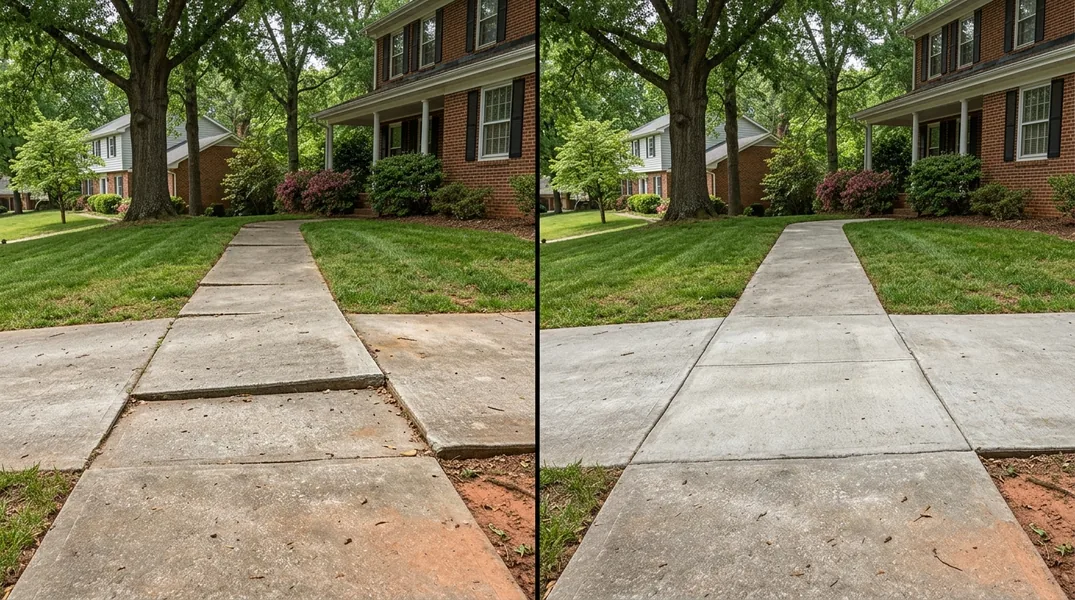
Another telltale sign is uneven settling. If your driveway has a noticeable hump or depression, or if you can see that one section has lifted higher than an adjacent section, Cecil clay movement is likely responsible. Similarly, if doors and windows in your home stick or become difficult to open during certain seasons, foundation settling from clay movement may be the cause. Interior cracks in basement walls, especially horizontal cracks or cracks that widen as they extend across the wall, are also classic indicators of clay-related foundation stress. If you're noticing any of these issues, contacting a professional for evaluation is your best first step.
Concrete Repair in Greensboro North Carolina: Your Options
When Cecil clay damage appears, homeowners have several options for concrete repair greensboro north carolina professionals. The right solution depends on the severity of the damage, the underlying cause, and your long-term goals for the property. For minor cracks and surface damage, epoxy injection and concrete sealants can provide effective, affordable solutions. These materials fill cracks and prevent water infiltration, which is critical in preventing the freeze thaw cycle from worsening the damage.
For more serious issues, mudjacking or polyurethane injection can help lift settled concrete back to its original level. These techniques work by injecting material beneath the concrete to fill voids and restore proper support. However, these solutions don't address the underlying clay movement, so they may need to be repeated as the soil continues to shift. In cases where structural integrity is compromised or where damage is extensive, complete concrete replacement may be the most cost-effective long-term solution. The key is getting a professional assessment early, before small problems become catastrophic ones. Greensboro Concrete can evaluate your specific situation and recommend the best approach for your needs. Call (336) 814-2836 to schedule your free estimate.
Prevention Strategies: Protecting Your Concrete from Cecil Clay Damage
While you can't change the soil beneath your property, you can take proactive steps to minimize concrete damage from Cecil clay and freeze thaw cycles. The most important strategy is water management. Ensure that gutters and downspouts direct water away from your foundation and concrete surfaces. Poor drainage allows water to pool around concrete, increasing the rate of clay expansion and water infiltration. Grade your landscaping so water flows away from structures, and consider installing a proper drainage system if your property is particularly prone to water accumulation.
Sealing concrete is another critical preventative measure. Quality concrete sealers create a protective barrier that reduces water penetration into the concrete, which slows both the freeze thaw process and the rate at which water reaches the clay below. Regular resealing every two to three years maintains this protection. Additionally, avoid using road salt on driveways during winter, as salt accelerates concrete deterioration. Instead, use sand or calcium chloride alternatives. For new construction or major concrete projects like Concrete Patios, work with contractors who understand local soil conditions and specify appropriate concrete mix designs and foundation preparations for Piedmont clay areas. These preventative measures won't eliminate clay movement, but they can significantly extend the life of your concrete and reduce repair costs over time.
Looking for a professional tree service in Greensboro? Greensboro Concrete responds fast for all your concrete needs.
Get a Free QuoteOur services: Concrete Driveways · Concrete Patios · Stamped & Decorative Concrete