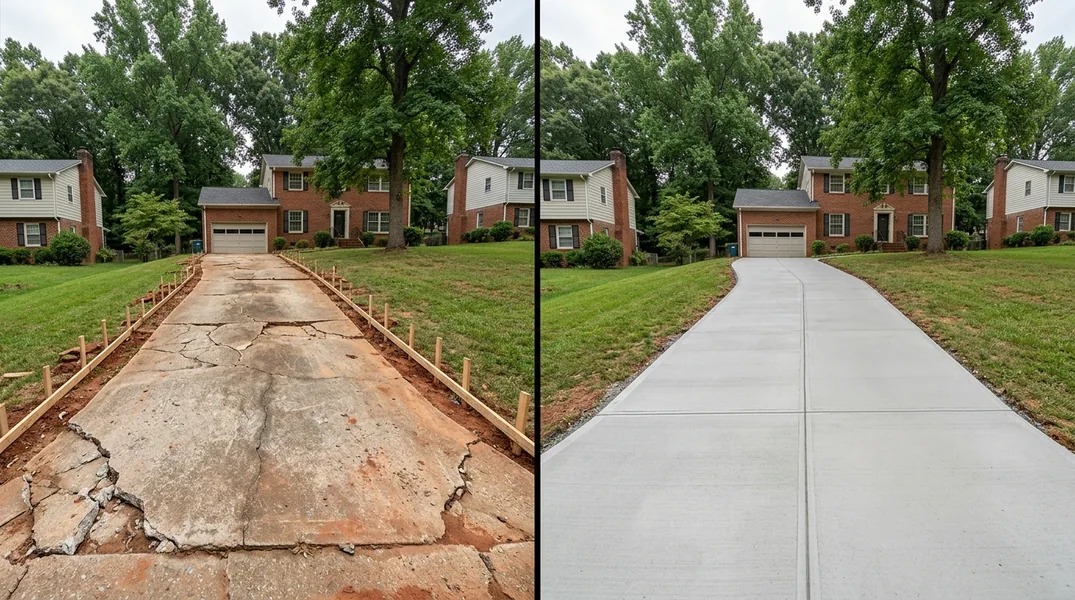
Understanding Greensboro's Climate and Concrete Curing
If you're planning a concrete project in Greensboro, timing is everything. Unlike simply picking a date on the calendar, pouring concrete requires careful attention to temperature, humidity, and seasonal weather patterns. The reason is straightforward: concrete doesn't just dry like paint. It cures through a chemical process that's deeply affected by environmental conditions. When temperatures drop too low or fluctuate too much, the concrete's strength and durability can be compromised, leading to cracks, scaling, and premature failure.
Greensboro sits in the Piedmont region of North Carolina, which means we experience four distinct seasons with significant temperature swings. Winter temperatures can dip below freezing, spring brings unpredictable rain and temperature fluctuations, summer offers consistent warmth, and fall provides a cooling-down period. Understanding how these seasonal shifts affect concrete curing freeze-thaw cycles is essential before you schedule your project. A free estimate from a qualified Greensboro concrete contractor can help you plan the perfect timing for your specific needs.
Spring: The Most Popular Concrete Pouring Season in North Carolina
Spring is widely considered the best time to pour concrete in North Carolina, and for good reason. As temperatures consistently climb above 50 degrees Fahrenheit and the risk of frost diminishes, concrete can cure properly without the stress of freeze-thaw cycles. Between late April and early June, Greensboro homeowners typically see the most favorable conditions for Concrete Driveways, Concrete Patios, and other projects. The soil has warmed up from winter, the air is moist enough to support proper hydration of the concrete, and unexpected cold snaps become increasingly rare.
However, spring does come with one caveat: rain. North Carolina's spring season can be unpredictable, with frequent showers and occasional storms. While some moisture is beneficial for concrete curing, excessive rain during the first few days after pouring can weaken the surface and create drainage issues. A professional concrete contractor knows how to protect freshly poured concrete from heavy rain and will have contingency plans in place. This is why working with an experienced team matters. Call Greensboro Concrete at (336) 814-2836 to discuss how spring weather might affect your project timeline.
Fall: The Second-Best Window for Concrete Pouring
Fall, particularly September through October, represents an excellent secondary window for concrete work in North Carolina. As summer heat fades and temperatures settle into the 60 to 75 degree Fahrenheit range, conditions become ideal for proper curing. The air is typically less humid than summer, which helps concrete cure at a steady, predictable pace. Rainfall tends to be more moderate than spring, and the risk of sudden temperature swings is lower than in early spring or late fall. For homeowners who missed the spring window or prefer cooler working conditions, fall offers a genuine second chance to complete Concrete Driveways and other installations.
One important consideration in fall is the approaching winter. If you're pouring concrete in late October or November, you need to ensure the concrete has sufficient time to cure before the first hard freeze arrives. Concrete typically requires at least seven days of temperatures above 50 degrees to reach adequate strength. If a cold snap arrives too soon, the concrete may not have developed enough strength to withstand freeze-thaw damage. A knowledgeable Greensboro concrete contractor will calculate cure time carefully and may recommend accelerated curing methods if timing is tight. Contact Greensboro Concrete for professional guidance on whether your fall timeline will work.
Why Winter and Summer Require Special Considerations
Winter in North Carolina is not ideal for concrete pouring, primarily because of freeze-thaw cycles. When temperatures fluctuate around the freezing point, moisture in freshly cured concrete can freeze and expand, creating stress within the slab. This expansion and contraction weakens the concrete structure and often results in cracks, spalling, and surface deterioration. Even if you use heated enclosures and specialized additives to lower the freezing point of the concrete mix, winter projects carry significantly higher risk and cost. Most professional contractors avoid winter pours unless absolutely necessary, and if they do proceed, they charge a premium for the extra labor, materials, and monitoring required.
Summer presents a different challenge. While freezing is not a concern, extreme heat can actually speed up the curing process too quickly, leading to uneven strength development and surface cracking. High temperatures also increase evaporation rates, which can prevent the concrete from hydrating properly. Additionally, summer heat can make the job physically demanding for workers and may require extra precautions to keep the concrete workable. If you must pour concrete in summer, early morning pours and shade protection become essential. Projects like Stamped & Decorative Concrete are particularly sensitive to temperature extremes, so seasonal timing is even more critical for aesthetic finishes.
Planning Your Concrete Project: What to Ask Your Contractor
When you're ready to schedule your concrete work, communicate openly with your contractor about seasonal considerations. Ask specific questions about how weather will affect your project timeline, what precautions they'll take if conditions change unexpectedly, and whether they recommend waiting for better conditions or proceeding with additional protective measures. A reputable contractor will be transparent about the risks associated with off-season pouring and won't pressure you into a timeline that compromises quality. They should also explain their experience with concrete curing freeze-thaw issues and how they mitigate those risks in your specific situation.
It's also worth asking about pricing variations based on season. Some contractors offer discounts during slower months like winter, but those savings may not justify the increased risk and potential for costly repairs later. Conversely, spring and fall projects might have longer wait times because demand is higher. Greensboro Concrete offers free estimate consultations where we discuss your timeline, budget, and seasonal factors. Call us at (336) 814-2836 to speak with a professional who understands North Carolina's unique climate challenges.
Concrete Repair and Resurfacing: When Seasonal Timing Matters Too
If you already have concrete that's showing signs of wear, seasonal timing is equally important for Concrete Repair and Resurfacing work. Freeze-thaw damage often becomes visible in late winter or early spring as the concrete expands and contracts repeatedly. If you notice cracks, spalling, or surface deterioration, scheduling repairs in spring allows the newly repaired or resurfaced concrete to cure under optimal conditions. Attempting major repairs in fall or winter means the newly applied concrete must survive the coming freeze-thaw cycle before it's fully cured, which significantly increases the risk of failure. Similarly, if you're planning to resurface an existing driveway or patio, spring and early summer provide the best window for success.
Winter damage to concrete is common in North Carolina, so many homeowners find themselves needing repairs by March or April. Rather than waiting and hoping the damage doesn't worsen, addressing it promptly in spring ensures the repair lasts for years. The cost of delaying repairs often exceeds the cost of fixing the problem when conditions are right. Greensboro Concrete specializes in identifying freeze-thaw damage and recommending the best repair strategy for your situation. Whether you need a minor patch or complete resurfacing, we'll advise you on timing that maximizes durability and value. Reach out at (336) 814-2836 to schedule an inspection and discuss your repair options.
Looking for a professional tree service in Greensboro? Greensboro Concrete responds fast for all your concrete needs.
Get a Free QuoteOur services: Concrete Driveways · Concrete Patios · Stamped & Decorative Concrete